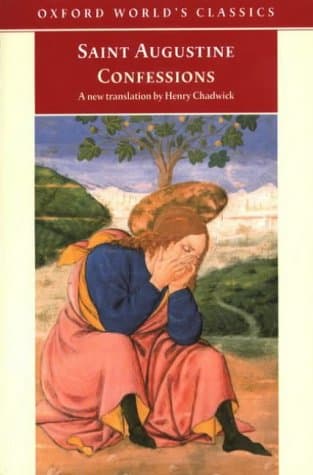
Saint, Bishop of Hippo Augustine, The Confessions
Value For Money
Saint, Bishop of Hippo Augustine, The Confessions
When you purchase through links on our site, we may earn an affiliate commission. Here's how it works.
User Reviews
Value For Money
Aurelius Augustinus 354-430 Ad. He Was Born
Aurelius Augustinus 354-430 AD.
He was born in Thagesta in Numidia (North-Africa).The Confessions' has two parts. The first part is a kind of autobiography and the second part is a commentary to the first chapters of Genesis.
He taught rhetorics first in Carthago in Africa, later in Milan in Italy. But after a while he developed an aversion not only for rhetorics (he began to consider it as useless and conceited and as a pool of sins) but also for his fellow-man.
He began to show neurotic behaviour like having a fainting fit without apparent cause. It's for those reasons that psychologists like to study Augustine's Confessions.
As a result of his problems, Augustine became a Christian and he was one of the first to found a monastery. Later on he became bishop of Hippo in North-Africa.
In the second part of 'The confessions', he tries to explain the first chapters of Genesis. ( This second part is very impressive and is the cause that "The Confessions" is in my personal top five of the best books I read during the last 30 years.)
His plan was to comment on the whole Bible but he soon understood that this was an impossible task for one man.
Nevertheless he's is considered as the Father of modern Theology because of his comments.
To give two examples: When the Bible says that God created man to His image, Augustine explains that it means that man knows the difference between good and evil just like God does, it doesn't mean a physical resemblance.
Another interesting thought is about Creation. Creation is not limited in space and time: since God is everywhere, Creation is also everywhere and goes on till eternity.
As conclusion I should mention that 'The Confessions'is also important because it is the first publication in Antiquity in which an author reveals his most inner feelings.
Thanks for your comment Sarah. I respectfully suggest that literature, in all its forms, should be cherished and not moderated on a minimalistic 'safety level' only. If your excellent site ever decides to raise its already high standards even higher I am willing to discuss terms and consider coming on board. Surely all unpaid reviewers deserve the very best presentation of their work? Dunt thay? NOTE FROM REVIEWCENTRE: Hi Ivan1890, ALL reviews and comments are moderated very seriously, but you must allow, on occasions for human error, thats why you asked for us to moderate you slight mistakes. We moderate very thoroughly, believe me, but some slight errors will always slip through. We all work extremely hard to keep up our extremely high levels, and constantly strive to get them even higher, but were humans are involved, error, no matter how small, will always follow. Thank you for your understanding, and we love reading all your reviews and comments. Please keep up the hard work, just as we do. Sarah
This is very interesting and a much better read than the plethora of reviews on air guns and catapults! Could the site controller please regularise review layouts (torn apart in cyber space?) and correct the occasional obvious spelling mistake in many reviews? NOTE FROM REVIEWCENTRE: All users are supposed to read through their own work before submitting it. We do try to regulate ALL comments and reviews but of course the "odd one" does slip through - please bear with us, we are extremely busy. As long as there are no rude words, or obscenities, that is more important. Thank you. Sarah.
Q&A
There are no questions yet. Be the first to ask a question.