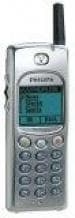
Philips Xenium 9@9
Features
Reception
Style
Philips Xenium 9@9
When you purchase through links on our site, we may earn an affiliate commission. Here's how it works.
User Reviews
Value For Money
Features
Reception
Style
The Philips Xenium 9@9 Is An Impressive Mobile Pho
The Philips Xenium 9@9 is an impressive mobile phone with a unique style. Offering an intuitive way to navagate through menus, could be improved by introducing a fluent roller bar instead. Its weight makes it heavy enough to feel important but light enough to fit in my pocket without any notice. Its feel and look make it unique in my country, its robust & has survived several drops & scrapes.
Now the best bit, this baby has an unbelievable battery life, I have never encountered such a power saver. I recon if there was ever a phone to be a commercial candidate for possible solar cell charging, then this would be it.
Value For Money
Features
Reception
Style
The Philips Xenium 9@9 Has Fantastic Battery Lif
The Philips Xenium 9@9 has Fantastic battery life. I charge it only twice a month (then I use it mostly for SMS). The size is very small except for the antenna. I have had no problems whatsoever with this phone.
I miss the feature to add words to T9. And why is there a swedish but not the norvegian. There is the norvegian ae though.
I think my good and bad points summary is enough. I just love it, I will go for a philips next time also.
Value For Money
This Is The Best Phone I Have Ever Owned, And Beli
This is the best phone I have ever owned, and believe me, I've owned lots. I never thought I would buy anything but an Ericsson, but their new range is not to my liking - too much like toys(sorry Ericsson, but it has to be said). It may not have all the features, but it has everything useful I need. I replaced the long antenna with a German made Mini-antenna only 5mm long, and now it is perfect. The battery life is so good, I only charge it twice a week - and I'm always on the phone. I hope that Philips keep producing phones as good as this, in case I ever need to replace it (actually, I bought a spare on E-bay in case anything happens to it!!). Buy this and love it!!!
I Am On My Fourth Replacement Phone Now And It I G
I am on my fourth replacement phone now and it I get call drop outs on every call. I tested my sim in other phones and it works fine. The first phones had software problems and used to lock up all the time. I have found Philips warranty service very poor and they really had to be pushed to replace the phone. I have had my current phone for about 12mths and Philips say they won't replace it because it is outside the warranty period of my first phone. I noticed they no longer sell the xenium. I will never buy another Phillips product.
I have had a philips xenium 9@9 for about two years and generally I have been very happy with it. However it has just started freezing up and found the only way to start up again is to remove the battery and start again. The time period between freeze ups varies from almost instantly to sometimes half an hour.
I am thinking that philips include a time destruct bug in the software i.e. the phone dies after two years and they hope you will by one of their newer models.
I also had the same experinece with Philip Xenium 989. Always experiencing call-drop outs, even in a strong receiver area. It is so frustrating. Finally, I could not cope again and decided to sell the phone. The only advantage thing about this phone is the long life battery. Other features is pretty much standard.
I get the same problems with my Philips Xenium; I bought it in october 2001 and it worked very properly for more than one year. But now nine calls I make over ten fail even in very strong reception areas and every external calls are routed to my voice mail. I asked for help but could not get any from Orange mynetwork provider.
Value For Money
Features
Reception
Style
I Bought This Philips Xenium Mobile Phone And I'm
I bought this Philips Xenium mobile phone and I'm still using it for over two years because I liked it's battery life. Philips Xenium has the longest battery life I've seen so far (you can check sites for the exact duration). Another thing I like is the agenda, which helps me during the day to day business. The screen is big and nicely lit (blue). It has wap, dual band (work very well in many countries I've been traveling with it. It's lightweight. It's a good choice especially for women.
Value For Money
Features
Reception
Style
The Xenium 9@9 Is Such An Excellent Phone. The Pho
The Xenium 9@9 is such an excellent phone. The phone has all the features you could wish for for from a 1G phone. Everyone should own a Xenium 9@9. The phone is a little chisel looking. It has a roller on the side of the phone that is realy quite annoying. The Xenium has a weak aerial that can be snapped off easily. You can't add a word in T9. The phone really messes up when you change the sim cards, the voice tags get scrambled.
I bought a Phillips xenium 9@9 15 months ago. It was excellent but now it's impossible to switch on. Does anybody have a same problem? It's not a battery.
Anybody can help me?
In normal using conditions(It has never falled on down normal temperature...)
marc.dejean@fr.renault-
Value For Money
Features
Reception
Style
Oh !! It Was My First Reaction After Seeing The Ph
oh !! it was my first reaction after seeing the Philips Xenium 9@9 beauty. well works great, very easy. before this phone i was not enjoying but now getting fun from this. solid build. after all this is award winning mobile(if design for 2000)
Value For Money
Features
Reception
Style
Philips Xenium 9@9 Is A Great Phone. Looks So Sexy
Philips xenium 9@9 is a great phone. looks so sexy. lightweight. long battery life. never seen before in any phone. eveybody is asking when they see it in my hand !
good news is that one more xenium model is coming in same looks, but more light in weight, very thin! and with more features !! bye now dont think !!
from:kaushik
Value For Money
Features
Reception
Style
The Philips Xenium 9@9 Is A Great Little No-nonsen
The Philips Xenium 9@9 is a great little no-nonsense mobile phone for people that look for high autonomy (i.e., standby time and talktime between charges). Its carousel key or Pilot key is designed for very easy use, though it could be more conveniently located in the right side of the phone instead of the left.
The phillips Xenium was made by a LEFT hander!!!
Finally the simpson episode where Neddy Flanders opened up the leftorium got through to people!!
Gotta love the creator!!
Q&A
There are no questions yet. Be the first to ask a question.